


What Is T9HC? The Complete Guide (2026)
|
|
Time: 11 min
Product Finder
Find Your Nine Realms Match
Answer 5 quick questions to find your perfect cannabinoid product.
How familiar are you with cannabinoid products?
What kind of product are you looking for?
Where and how do you usually use cannabis?
What kind of effect are you looking for?
When should it kick in, and how long should it last?

Welcome to
Nine Realms
Our store is intended exclusively for people 18 years of age or older. Please confirm your age to continue.
By clicking here, you agree to our Terms and Conditions and Privacy Policy.
|
|
Time: 11 min
What is T9HC? Researchers and people who like cannabinoids have been asking this question a lot as they try to learn more about this chemical that isn't very well known. People are always talking about new molecules in the world of hemp-derived cannabinoids. One of these new compounds is T9HC. People who want to know more about how cannabinoids are changing need to know about their effects, properties, and safety concerns.
Table of Content
TL;DR: T9HC is a cannabinoid that comes from hemp and looks a lot like THC. There isn't a lot of research on this yet, so be careful and only buy things from places that are clear and trustworthy.
The T9HC acronym refers to a type of cannabinoid that belongs to the larger group of tetrahydrocannabinol. To fully understand the T9HC meaning, we need to look at how cannabinoids are named and put together. Most of the time, the names of cannabinoids tell you how the molecules are put together, especially where the important chemical bonds are.
The name T9HC means that it is not the same as Delta-9 THC, which is a more common name. These small changes at the molecular level can have a big effect on how a cannabinoid interacts with the body's endocannabinoid system. T9HC cannabis hasn't been studied very much yet, but Delta-9 THC has been studied a lot for a long time.
Because of rules that separate different cannabis compounds, hemp-derived cannabinoids like T9HC have been getting a lot of attention lately. It was easier to sell hemp-based products after the US Farm Bill of 2018 and similar laws in Europe. This made people want to know more about other cannabinoids. But these rules are still hard to understand and change a lot from one place to another.
Flagging for awareness, not fixing here (out of scope for this pass): this paragraph and the ECS/receptor sections above treat T9HC as a structurally distinct cannabinoid isomer. But the live agents.md / buy-t9hc copy describes T9HC as our own hemp product line with THC content below the EU threshold -- i.e. framed as a concentration/threshold distinction, not a different molecule. Worth resolving which framing is actually correct before this gets more scrutiny -- I didn't touch this section since I can't verify the chemistry either way.
You need to know how T9HC works with the body's endocannabinoid system in order to understand what it is. In this biological system, there are two main types of receptors. CB1 receptors are mostly in the central nervous system, while CB2 receptors are mostly in immune cells and peripheral tissues.
The T9HC cannabinoid seems to bind to CB1 receptors, just like other types of THC. CB1 receptors control a number of bodily functions, such as mood, appetite, pain perception, and memory. We don't yet know much about how T9HC's ability to bind to these receptors and work at them compares to Delta-9 THC's.
The CB2 receptor is important for the immune system and how the body responds to inflammation. Preliminary findings indicate that T9HC may interact with these receptors; however, the specifics and extent of this interaction necessitate further scientific inquiry. The dual receptor engagement pattern is a common trait of cannabinoids that makes their effects on the body even more complicated.
Your liver breaks down T9HC in the same way that it breaks down other cannabinoids. The body's cytochrome P450 enzyme system changes the compound into other metabolites. The effects can last longer or be stronger depending on whether these metabolites are working or not. Because everyone's enzymes work differently, people can process and respond to T9HC in very different ways.
For a deeper look at exactly how T9HC engages your endocannabinoid system, see our full science breakdown of how T9HC works.
People often ask T9HC wiki resources and educational materials how this compound is different from regular THC. So, T9HC what is it exactly compared to what we already know? Based on current understanding, the table below shows the most important things to compare.
Aspect |
T9HC |
Delta-9 THC |
Research volume |
Limited, emerging |
Extensive, decades of study |
Legal status |
Varies by jurisdiction |
Controlled in most regions |
CB1 binding |
Likely present, specifics unclear |
Well-documented, high affinity |
Source |
Typically hemp-derived |
Cannabis plant (various strains) |
Safety data |
Insufficient for conclusions |
Established profile exists |
Availability |
Niche market |
Widely regulated or restricted |
The molecular structure of T9HC determines how it behaves structurally compared to regular THC. Cannabinoids can fit into receptor binding sites in different ways depending on the position of a double bond or the arrangement of the atoms. These differences make the drug stronger or weaker, change how long the effects last, and change how people feel about it.
It's important to remember that two things that look the same may not have the same effects. The cannabinoid field has shown many times that small changes to molecules can lead to very different results. This principle stresses the need to do research on specific compounds instead of making assumptions based on their chemical family ties.
For the full side-by-side, see our dedicated T9HC vs THC comparison.
Safety should always come first when learning about T9HC. To be honest, there isn't a lot of scientific information on T9HC. This rule makes it harder for people to choose wisely.
Initial observations and anecdotal reports give us some early information, but these should not be taken as strong scientific proof. We know these things right now:
Some of that early feedback is collected in our T9HC user reviews roundup.
People who are thinking about T9HC products should be careful because of these limitations:
Our experience guide covers onset and duration in more depth if you’re planning your first try.
Different companies make T9HC in different ways. Understanding how T9HC is made matters because some cannabinoids that come from hemp are produced through conversion processes that could add impurities if they aren't carefully controlled. A third-party lab should test a product to make sure it has the right ingredients and to look for any possible contaminants.
Companies that are honest will give you certificates of analysis that show how much cannabinoids, leftover solvents, heavy metals, and bacteria are in the product. It's a big red flag if you don't have these kinds of papers.
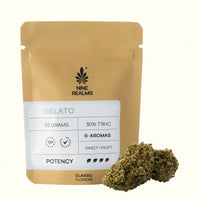
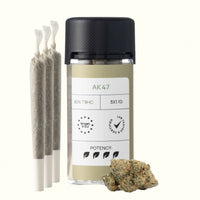
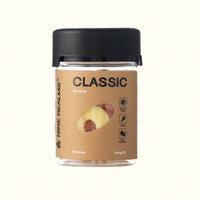
Every batch across our own T9HC range — flower, gummies, joints, and diffusers — is independently lab-tested, with certificates published for you to check.
This section explains, as clearly as we can, how cannabinoid legality actually gets decided in the EU — and where T9HC sits inside that framework. It isn't legal advice, and it isn't a final verdict: cannabinoid law changes quickly, and the fastest-changing part of it (see the HHC, THCP, and 10-OH-HHC examples below) can shift in months, not years.
T9HC is Nine Realms' own cannabinoid line, made from EU-approved industrial hemp with a THC content below the EU's designated threshold. The legal status of cannabinoid products differs by country and can change, so we recommend checking the regulations that currently apply where you live before ordering. This isn't legal advice. What we can guarantee is the product itself: every batch is independently lab-tested for potency, with certificates published for you to check.
There's no single EU-wide cannabis law. Each of the 27 member states regulates hemp-derived cannabinoids differently, and a compound's real-world status usually comes down to three separate, overlapping questions rather than one law answering everything at once.
Germany has the most legal activity around cannabinoids of any European market, which makes it the clearest example of how those three layers interact:
You can read the full official text of each law directly: BtMG, NpSG, KCanG, and the EU Novel Food Regulation.
Three cannabinoids sold as “legal alternatives” to THC have already been affected by NpSG's group-based approach in Germany:
These bans happened because NpSG regulates by substance group, not a fixed list of names — so whether a given compound falls inside an already-regulated group definition is a real legal question, not something we can answer with a guess. That's exactly why we're not making a specific legal claim about T9HC beyond what's stated in “The Short Answer” above, and why this section will be updated as soon as we have a formal legal opinion to share.
Separately from controlled-substance law, the EU's Novel Food Regulation ((EU) 2015/2283) requires foods and food ingredients that weren't consumed to a significant degree in the EU before May 1997 to pass pre-market safety authorisation before they can be sold. Several cannabinoids have been drawn into novel food classification debates in recent years — it's a live, evolving area that sits alongside each country's own controlled-substance rules, not instead of them.
Independent of a product's sales-legality status, THC in any form can register on a roadside drug test and trigger driving-under-the-influence law in most European countries — that law is about impairment and detection, not about where or how legally you bought the product. If you drive, treat any THC-containing product, T9HC included, accordingly.
What This Means If You're Buying:
You should know that a lot of people are interested in T9HC, but scientists don't know much about it yet. T9HC is a cannabinoid that comes from hemp and is similar to THC in structure. This has caught the attention of people who are interested in the larger world of cannabinoids. There are still a lot of questions that need to be answered, though, because there isn't enough strong research.
Nine Realms believes that you need clear and honest information to make good decisions. The cannabinoid field is always changing, and what we know now may change or become more accurate as research goes on. We think that when it comes to new compounds, it's best to be careful and wait, putting safety and quality ahead of newness.
If you want to use cannabinoids for health reasons, it's best to stick with ones that have been well-studied and shown to be safe. As scientists keep studying compounds like T9HC, they will be able to give us better advice. Until then, anyone who wants to try these drugs should be careful, get them from a trusted source, and be responsible for what they do.
And if legality is your main question, the fullest picture — including why the answer differs so much by country, and how quickly it can change — is in the dedicated section above.
"To understand T9HC is to understand how small changes in nature can create entirely new experiences."
No, T9HC and Delta-9 THC are not the same. They belong to the same chemical family and have similar structures, but the way their molecules are arranged is different. These differences may alter the interaction of each compound with the body's endocannabinoid system; however, further research is necessary for direct comparisons.
T9HC's legal status genuinely differs by country and can change quickly — see “The Legal Status of T9HC in Europe” above for the full breakdown, including the three layers of law that usually decide a cannabinoid's status (national controlled-substance law, national cannabis-specific law, and the EU's Novel Food Regulation) and what happened to comparable cannabinoids like HHC and THCP. Always check the regulations that currently apply where you live before ordering — this isn't legal advice.
Choose products from companies that do thorough third-party lab tests, such as checking for contaminants, cannabinoid profiles, and certificates of analysis. Other signs that a product is safe to use are clear labels and information about where it comes from. Don't buy anything unless it comes with this paperwork.
Author: Edijs Eleksis
Growing up in a country where cannabis was stigmatized and even shamed, Edijs faced many roadblocks to get to enjoy the benefits of this plant. However, as more countries worldwide are opening up to the idea of cannabis-available society, Edijs is inspired to take on a mission: spreading awareness about cannabis and its industry in Europe through engaging, educational blog content. Because only with more information, humans as a collective, can make decisions that are better for all of us!


