


Lemon Cookies Strain: Every Major Variant, and Effects Compared
|
|
Time: 9 min
Product Finder
Find Your Nine Realms Match
Answer 5 quick questions to find your perfect cannabinoid product.
How familiar are you with cannabinoid products?
What kind of product are you looking for?
Where and how do you usually use cannabis?
What kind of effect are you looking for?
When should it kick in, and how long should it last?

Welcome to
Nine Realms
Our store is intended exclusively for people 18 years of age or older. Please confirm your age to continue.
By clicking here, you agree to our Terms and Conditions and Privacy Policy.
|
|
Time: 9 min
Lemon Cookies strain is not one plant. Ask five different growers or seed banks and you get five slightly different answers. "Lemon Cookies" has turned into a small cannabis family of related crosses that all lean on the same citrus-and-cookie flavour signature, rather than one fixed genetic line. That distinction matters the moment you actually try to choose one. The base cross, Lemon Cherry Cookies, Purple Lemon Cookies, and Blue Lemon Cookies share a name and a flavour idea, but they don't smoke, taste, or feel identical. This guide profiles each on its own terms and closes with where Nine Realms' own Lemon Cookies fits into the family.
Table of Content
TL;DR: Lemon Cookies is a cluster of related crosses, not one genetic line, and that's easy to miss. Base Lemon Cookies, Lemon Cherry Cookies, Purple Lemon Cookies, Blue Lemon Cookies, all sharing the citrus-cookie flavour family, all different in lineage, colour, and effect lean. Pick by what you actually want from the smoke. Nine Realms carries its own Lemon Cookies as a 40% T9HC flower, under 0.2% THC, with a refreshing citrus aroma and a sweet, cookie-like flavour.
Variant |
Distinguishing trait |
Flavour lean |
Effect lean |
THC range |
Lemon Cookies (base) |
The reference cross most other variants are measured against |
Citrus-forward, sweet cookie |
Balanced hybrid |
Commonly reported 20-30% (market range, varies by breeder) |
Lemon Cherry Cookies |
Cherry-note addition to the citrus-cookie base |
Citrus plus cherry sweetness |
Commonly described as hybrid, slightly more upbeat; treat as a lean, not a fixed spec |
Not independently documented; assumed similar to base |
Purple Lemon Cookies |
Purple-pigmented phenotype |
Citrus with a deeper berry or grape undertone |
Often reported as leaning slightly more relaxed; unconfirmed by any single authoritative source |
Not independently documented; assumed similar to base |
Blue Lemon Cookies |
Blueberry-lineage influence |
Citrus with a blueberry sweetness |
Frequently described as calming or body-forward; again, a lean rather than a settled fact |
Not independently documented; assumed similar to base |
Breeders keep coming back to the lemon-cookie flavour combination for one simple reason. It sells. Citrus terpenes paired with cookie-dough sweetness sits in the same commercial territory as the wider Cookies family that gave us Girl Scout Cookies, Wedding Cake, and Gelato.
When a flavour combination sells like that, multiple breeders chase it independently without ever comparing notes. The result is a single lemon cookies strain name covering several genuinely distinct plants.
Most strain guides skip this distinction entirely. They treat Lemon Cookies as one fixed cross, typically cited as Girl Scout Cookies × Lemon Haze, and never mention the wider family sitting under that label. Three things drive the splinter:
Each variant below gets treated on its own terms.
Start with the flavour, because that's the one thing nearly every source agrees on. Citrus-forward on the inhale, sharp lemon rind up front, a sweeter, doughier cookie note on the exhale, driven mainly by limonene alongside supporting myrcene and caryophyllene. It settles into a balanced hybrid effect: an initial lift that stays clear-headed rather than racing, followed by a body ease that settles in without pinning you to the sofa. That flavour-effect combination is the whole reason the name stuck, and the reason later variants kept borrowing it.
The lineage story is messier. The base Lemon Cookies cross is usually pitched as Cookies-family genetics crossed with a lemon-forward parent. Some accounts point to Lemon Skunk or a similar citrus-heavy line alongside a Girl Scout Cookies-type parent, depending which seed bank you ask. Exact breeder and cross details shift from source to source, so treat this as commonly repeated shorthand rather than settled fact. This is the reference point the rest of the family gets measured against. It's also the version Nine Realms itself carries as its own lemon cookies strain, covered in full later in this guide.
On potency, this base cross is commonly reported in the 20-30% THC range across German strain databases and seed vendors. That's a general market range, not a fixed lab figure, worth remembering before you treat any single number as gospel. Lemon Cookies CBD content, by contrast, sits low, well under 1%, consistent with a strain bred for a THC-forward effect rather than a balanced cannabinoid profile. That THC range describes the conventional high-THC strain sold under this name elsewhere, not Nine Realms' own product, covered separately below.
"Lemon Cherry Cookies" and "Cherry Lemon Cookies" both turn up in searches. Nobody's fully nailed down whether these are the same cross under a flipped name or two distinct plants named independently. Strain naming here just isn't standardised, so we're not going to manufacture certainty the record doesn't support.
What most descriptions do agree on is the flavour shift. A rounder, sweeter cherry note layers over the citrus-cookie base, softening the sharpness of straight lemon into something closer to cherry lemonade. The usual explanation for that shift involves a cross bringing in Cherry Pie or a similar cherry-forward parent alongside the Cookies-family lemon line, though details vary between sources and nobody treats this as settled. Effect descriptions often lean slightly more upbeat and social than the base cross. That tracks with the sweeter profile, though it's an association worth taking loosely rather than as cause and effect.
Purple hues in the buds and leaves are what set this one apart visually. They typically develop from anthocyanin production during cooler growing temperatures, a trait common across purple-leaning varieties generally, not unique to this cross. It's worth saying plainly: colour tells you about pigment, not potency, however often the two get conflated in casual strain talk.
Sources don't agree on much beyond that. Lineage claims are thinner and less consistent than for the base cross, often citing an unspecified purple-leaning parent without naming names. Flavour-wise, the citrus-cookie signature is still there, sitting alongside a deeper berry or grape undertone that most purple-pigmented crosses tend to carry regardless of their specific breeding. Effect descriptions for this variant skew slightly more relaxed or body-forward than the base cross, a pattern that shows up across purple-family strains generally. That may say more about the colour trait than about this specific cross.
The flavour result here is the most distinct departure from the base cross among the four variants covered in this guide. Citrus stays present but shares the stage with a genuine blueberry sweetness, giving the smoke a fruitier, less purely citrus-forward character than the original or Lemon Cherry Cookies.
As for how it got there, the going explanation points to blueberry lineage folded into the citrus-cookie base, a cross involving Blueberry genetics or a Blueberry-descended parent alongside the Lemon Cookies line. The specific breeder and parentage details circulating for this cross are sparse, much like Purple Lemon Cookies. We'd rather flag that gap than fill it with an invented pedigree. Effect descriptions lean towards calming or body-forward, in keeping with how Blueberry-descended crosses tend to get described elsewhere.
The name alone doesn't tell you what you're getting. Choosing the right lemon cookies strain really comes down to matching flavour preference and desired effect lean to the specific cross.
All four share a balanced-hybrid thread rather than pushing hard towards pure stimulation or pure sedation, with the pigmented and fruit-influenced pair skewing more body-forward:
Whichever lemon cookies strain you pick, the usual cannabis considerations apply. Dry mouth and dry eyes are common and easily managed with water and eye drops. Start low if you haven't tried that specific variant before.
Cookies-family genetics, including citrus-leaning crosses in the same broad territory as Lemon Cookies, do appear among licensed German medical cannabis cultivars. Availability under any specific named cultivar is never guaranteed, though. Patients access cannabis through the standard Cannabis auf Rezept framework: a doctor issues a prescription naming either a specific cultivar or a THC range, and an authorised Apotheke sources and dispenses it. That supply chain is tested and labelled to pharmaceutical standards, typically more conservative than a recreational seed-bank phenotype.
If you're researching a lemon cookies strain for medical use in Germany, treat the pharmacy cultivar as the relevant reference point rather than any recreational description. Check current availability with a prescribing doctor or dispensing Apotheke.
Four variants, one shared flavour idea, and a fair amount of unresolved lineage detail once you look past the marketing copy. That's the honest state of the Lemon Cookies family.
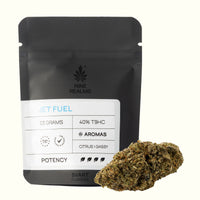
Nine Realms carries its own Lemon Cookies as a 40% T9HC flower, with THC content kept under 0.2%, meeting the European legal threshold without ambiguity. That distinction matters precisely because so much of the wider Lemon Cookies family trades on flavour reputation and loosely sourced lineage claims. Our product page states cannabinoid concentration plainly, and the legal compliance isn't an asterisk. It's the baseline.
On flavour, Nine Realms' Lemon Cookies delivers the same citrus-cookie signature this family is built around. A refreshing citrus aroma paired with a sweet, cookie-like flavour profile, the exact combination that made the original cross worth naming in the first place. Where the wider market gives you a name and asks you to trust it, we give you the concentration, the compliance threshold, and the flavour description.
Four names, one shared flavour idea, real differences underneath once you look closely. Picking the right lemon cookies strain means picking by what you actually want from the smoke: the classic citrus-cookie balance, a cherry-sweetened lift, a deeper purple-toned relaxation, or a blueberry-leaning calm. Don't just pick by whichever version happens to be sitting on the shelf in front of you.
"Same flavour idea, four different plants — know which one you're actually buying."
Lemon Cookies isn't a single fixed genetic line but a family of related cannabis crosses that share a citrus-and-cookie flavour signature. The base cross is generally described as a hybrid combining Cookies-family genetics with a lemon-forward parent. It's the reference point other lemon cookies strain variants (Lemon Cherry Cookies, Purple Lemon Cookies, and Blue Lemon Cookies) are all measured against.
Lemon Cherry Cookies adds a cherry note to the base Lemon Cookies citrus-cookie flavour, generally attributed to a cross bringing in a cherry-forward parent. It's genuinely unclear whether "Lemon Cherry Cookies" and the flipped name "Cherry Lemon Cookies" refer to the same cross or two distinct plants named independently by different breeders. No reliable source resolves that ambiguity definitively.
The base Lemon Cookies and its named variants are commonly described as balanced hybrids rather than leaning heavily indica or sativa. Purple Lemon Cookies and Blue Lemon Cookies do turn up more often in relaxation-leaning, body-forward descriptions than the base cross or Lemon Cherry Cookies. Treat that as a commonly reported lean, not a fixed, confirmed classification.
Author: Jans Beloglazovs
Emerging from Europe's strict cannabis landscape, Jan has become a known figure in the European cannabis industry through vast experience in cannabusiness and a keen understanding of the shifting trends in Europe. Co-founding the Nine Realms cannabis brand, he leverages his expertise to advocate for progressive cannabis policies and educate a broad audience.


